
Materials Guide
Leather Types and Materials: A Buyer’s Guide
Leather is not one material. The grade of the hide, the tanning method, and the finish all change how a product looks, feels, and wears. This guide explains the common leather types and the trade-offs that matter for bags, wallets, belts, and jackets. Availability of any type is confirmed with the partner for each project.
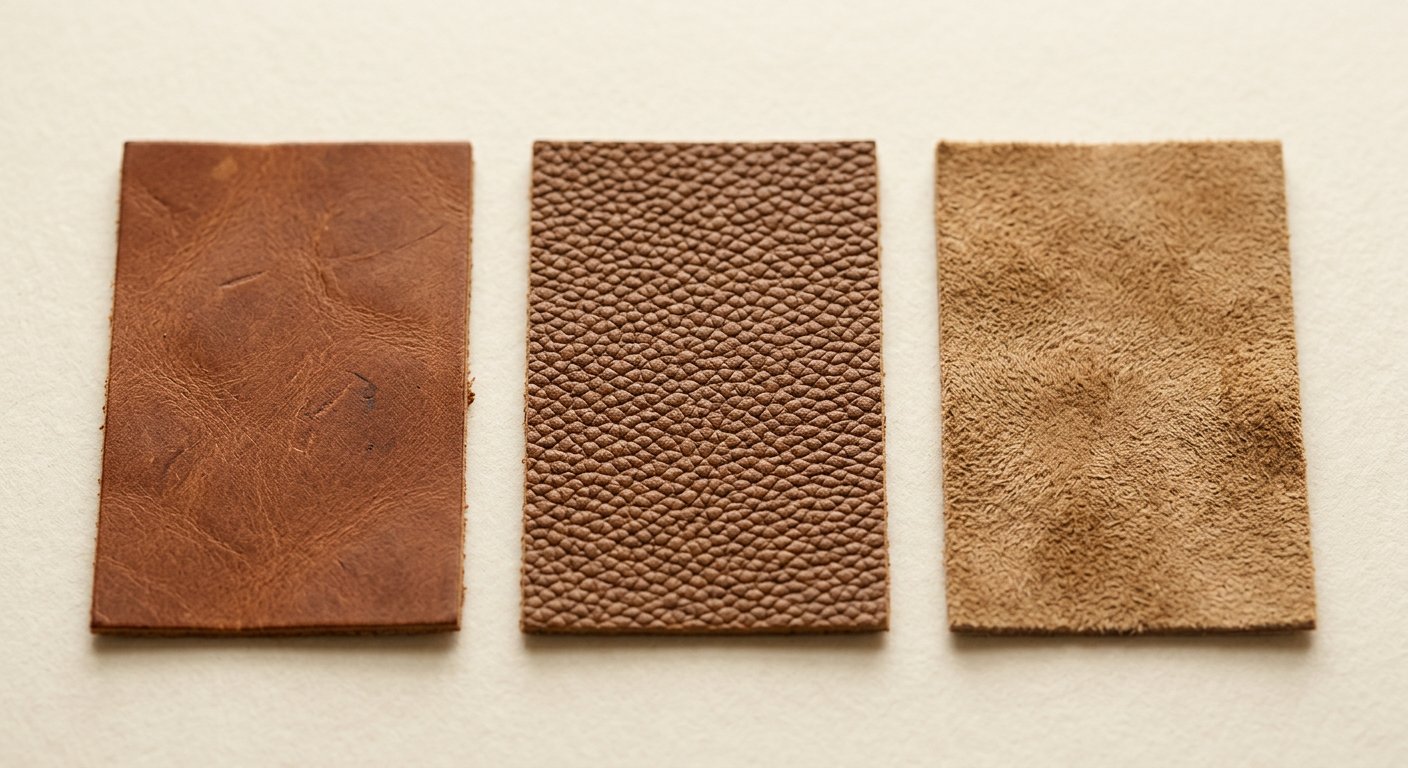
Full-grain and top-grain
Full-grain leather keeps the natural grain surface and is generally valued for its strength and patina. Top-grain leather has the surface sanded and refinished, which gives a more even look. Both can be used for premium goods, and the choice depends on the look you want and the cost you can carry.
Split leather and suede
Split leather comes from the lower layers of the hide. It is often used for linings, inner panels, and lower-cost products. Suede has a napped surface and needs more care in use, so it suits fashion accessories better than heavy-use goods.
Lambskin, goatskin, and cowhide
Lambskin is soft and light, suited to fashion jackets and gloves. Goatskin is fine and strong, used in gloves and small goods. Cowhide is thick and durable, often chosen for belts, bags, and biker jackets. The best choice depends on the product’s use.
Finishes and colour
Aniline, semi-aniline, and pigmented finishes change how much of the natural surface shows. Each finish has different fade, scuff, and colour-consistency characteristics. Ask for samples in the exact colour and finish you need.
| Leather | Typical feel | Common use | Trade-off |
|---|---|---|---|
| Full-grain | Firm, natural grain | Bags, belts, premium goods | Higher cost; shows natural marks |
| Top-grain | Smooth, even surface | Bags, wallets, jackets | Less natural character |
| Split | Soft, less dense | Linings, budget goods | Less durable on exposed surfaces |
| Lambskin | Very soft, light | Fashion jackets, gloves | Delicate; needs care |
| Cowhide | Thick, durable | Belts, biker jackets, bags | Heavier |
Checklist
Use this list before you request a quotation.
- Intended use and expected wear
- Thickness in mm or oz
- Finish type and colour
- Edge treatment
- Sample in the exact colour
- Care instructions for customers
Frequently asked questions
Which leather is the most durable?
Full-grain and cowhide are generally the most durable options, but durability also depends on thickness, construction, and finish.
Is genuine leather the same as full-grain?
Not necessarily. Genuine leather is a broad term that can include lower-grade layers. Ask for the specific grade.
Turn your brief into a quotation
Share your product reference and quantities, and we will confirm feasibility before quoting.